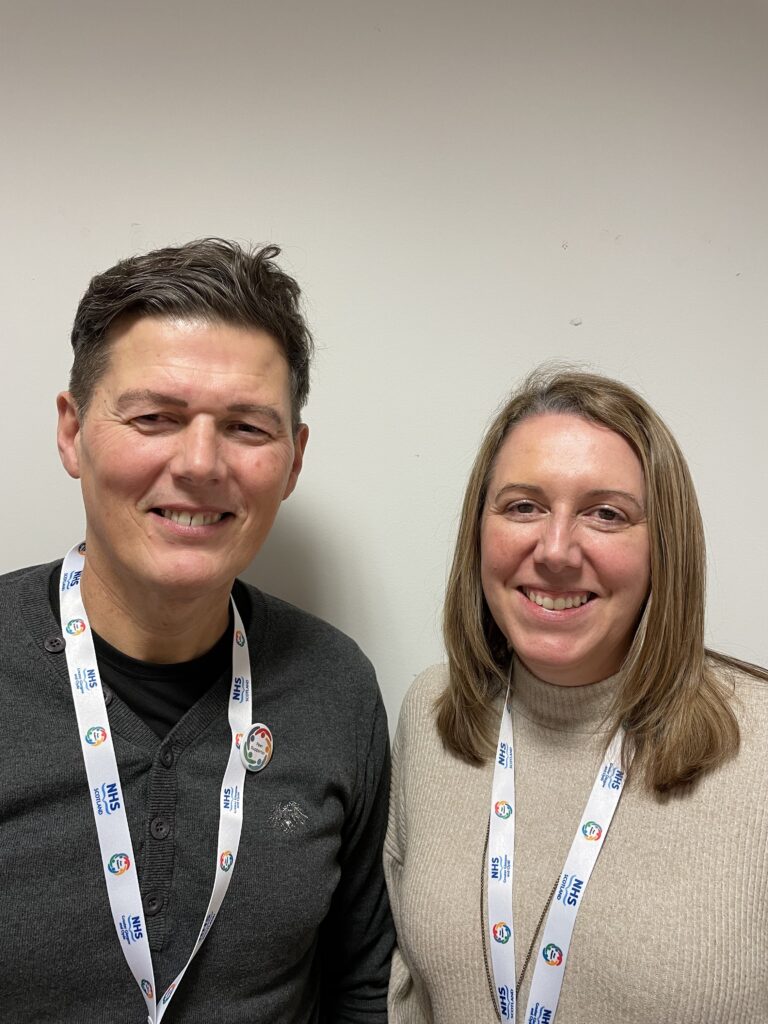
NHS Greater Glasgow & Clyde (NHSGGC) is the largest health board in Scotland, serving a diverse population across vibrant urban, suburban, and semi-rural communities. We offer a wide range of opportunities for GPs at all career stages. From newly qualified doctors to experienced GPs, in both traditional practice settings and innovative service models.
GP Registrar
GP Registrars, if you are completing your training, you should apply to join the NHS Primary Medical Services Performers List at least three months before CCT. 📩 Contact our team for advice and the application pack: ggc.gp.pcs@nhs.scot
Fully Qualified GP
There are fourteen Health Boards in Scotland, and you should apply to the board, where you intend to undertake the majority of your work for appraisal/revalidation purposes. If this is NHS GG&C,📩 Contact our team for advice and the application pack: ggc.gp.pcs@nhs.scot
Right to work check
You’ll need to prove your right to work in the UK to allow you to provide general medical services within Scotland.
Prove your right to work to an employer: get a share code – GOV.UK (www.gov.uk)
The share code should be generated and sent along with your Performers List application.
Share Codes/ Sponsorship/Visas
Visa and immigration rules changed in 2022. In the past, workers on Tier 2 visas could work only for the sponsoring employer. Following the rule changes, skilled workers are now entitled to work either unlimited hours with their sponsoring employer, or to work up to 20 additional hours with another employer (or for the worker’s own business) as long as the worker is still being sponsored for the original job.
In addition to the sponsored job, a skilled worker GP could now work:
- for another independent GP practice in the same Board area;
- for a Board-run (2C) practice in the same Board area;
- for a Board’s OOH service in the same area; or
- for all of the variants above but in a different Board area, or perhaps in multiple Board areas.
The responsibility of any individual employer is only to monitor the hours done by the employee if they have employed the GP as a Partner or a Salaried and to report any breaches of the Regulations
The GP has personal obligations to ensure that they do not exceed the 20-hour additional work limit.
Please find below a sample application form. Please note that this sample application form cannot be used to apply and is for information only.
NHS GG&C Performer’s List Application Form
- In order to work as a GP in Scotland, you will need to be a member of the Disclosure Scotland, PVG Scheme, and to work in NHS Greater Glasgow & Clyde, you will need to be on the NHS Primary Medical Services Performer’s list for Glasgow and Clyde. To obtain a copy of the application pack, please contact the FHS Team at ggc.gp.pcs@nhs.scot
Once you have been approved on the Performer’s List you will be able to apply for jobs. The NHS Scotland GP Jobs Site advertises GP vacancies by region, and you will be able to find the Greater Glasgow & Clyde Vacancies : https://jobs.scot.nhs.uk/ and/or Vacancies | Glasgow Local Medical Committee Ltd (glasgowlmc.co.uk) and NHS Scotland Jobs – Greater Glasgow & Clyde
Why Choose Greater Glasgow & Clyde?
Choosing to work in NHSGGC offers more than just a rewarding career, it’s also about the lifestyle:
• Vibrant City Life: Glasgow is Scotland’s largest city, known for its friendly people, thriving cultural scene, world-class music, shopping, and dining.
• Affordable Living: Lower cost of living compared to many UK cities, with affordable housing and excellent public transport.
•Outdoor Access: Within 30 minutes, you can reach Loch Lomond, the Clyde coast, and the Scottish Highlands, perfect for walking, cycling, and outdoor adventures.
• Education and Family Life: Excellent schools, universities, and family-friendly communities make the area ideal for settling long term.
• Professional Support: Strong educational links, peer networks, and opportunities to develop specialist interests.
Additional Resources : Explore the new NHS Scotland GP Workforce Centre a national online hub offering tools, guidance, and examples of best practice to support GP recruitment, retention, and sustainability.
For an informal discussion about GP opportunities in NHSGGC, contact: ggc.gp.pcs@nhs.scot
Thanks for your feedback!
How does a Sessional GP get an NHS mail account?
Response from NSS – Any GP, including Sessional GPs, are entitled to an NHSmail account. The issue is whether they should be attached to the practice they work in or not. I would suggest that if they are likely to work in a practice for 3 months or more they should be attached to the practice and if they move to another practice they are marked as a leaver from that practice and then added to the next by the practice admins. This would need to be done by your local administrator. If they are only working for a week here or there, they should float within the Board (not attached to anything except GGC Board).
To get an NHS Mail account a Sessional GP should phone DAISY, the IT Company NHS Greater Glasgow and Clyde use to support their systems, on 0344 863 1244 and log a call. The operator will take the GP through a series of questions, including which Health Board they are hosted by, take contact details, and then the account will be set up.
If a GP has an NHS Mail account from working in a practice can they retain it if they leave the practice to work as a Sessional GP?
Yes – When the GP is working for a Practice they will be attached to that practice, if they move to another practice they will be marked as a leaver from that practice and then added to the next by the practice admins. This would need to be done by your local administrator. If they are only working for a week here or there, they should float within the Board (not attached to anything except GGC Board).
What are the implications for a person’s PVG Scheme membership if they move from working in a practice to working sessionally, or if they come from another part of the UK?
PVG application is carried out as part of a new GP’s induction process, along with Performers List application, when they wish to practice as a GP. It is a national scheme and covers them wherever they work in Scotland, and whether they work as a Principal in a practice or sessionally. If a GP comes from another part of the UK they will have to complete the Scottish PVG process even if they are members of the scheme elsewhere in the UK
How would Sessional GPs access BNF online?
The BNF can be accessed from the Medicines Complete website at British National Formulary (BNF) | Pharmaceutical Press in order to access the site you must be working in a GP Practice, a member of NHS Scotland staff, student on NHS placements, or partner in local authorities and the voluntary health sector.
How would Sessional GPs Access the NHSGGC formulary?
You can access the GGC Formulary through Staffnet. If you are working in a practice the permissions on the PC should be sufficient. There are also smartphone apps that can be downloaded, however you need a SharePoint account in order to open either the online formulary or the app: GGC Clinical Info – Home (sharepoint.com)
How would Sessional GPs Access the online BNF?
Go to https://bnf.nice.org.uk/ and you can access the BNF on your device, either desktop or mobile.
Thanks for your feedback!
Please click on the links below to view the Medical (GP) Lists.
This information is updated quarterly.
Quarterly Medical Lists
Thanks for your feedback!
Course Overview
In this module you will examine some useful tools and methods that can help you understand the skills needed for good time management.
Learning Outcomes
By the end of this module you will be able to:
- Organise and plan your time
- Apply priorities to your tasks to manage your time effectively
- Recognise ways of scheduling time, managing distractions and managing e mail
- Use planning tools to maximise efficiency and productivity
Course Provider
- This course can be accessed online via LearnPro
Who Should Attend
- All staff are welcome to attend
Pre-requisites
- There are no pre requisites for this module
Duration
- Self-directed learning but should take approximately 45 minutes
KSF Links
- C2 – Personal and People Development
- C4 – Service Improvement
- C5 – Quality
- G5 – Services and Project Management
- G6 – People Management
e-Learning
This is e-learning course and is available via LearnPro. You will find it under the CPD category. For information and registration please click the link LearnPro .
If you need any further support to access this course, please contact the Learning and Education Support Team on 0141 278 2700 (Option 3).
Thanks for your feedback!
Course Overview
NHS Greater Glasgow and Clyde (NHSGGC) is committed to providing a positive security culture throughout the organisation and to ensure personal safety at all times of patients, residents, staff and visitors. We have produced this short e-module in line with changes in legislation and to help ensure we embed security principles within our workforce.
Learning Outcomes
By the end of the course delegates will be able to:
- Understand the principles of the UK Counter Terrorism Strategy (CONTEST)
- Keep secure door codes confidential so that they are only known by those that require them for regular discharge of their duties
- Observe all personal safety and security rules at all times as described in the NHSGGC Security and Threat Policy
- Challenge those persons not wearing photographic identification badges unless to do so would place them at risk
- Wear an up to date photographic identification badge at all time during work
- Understand the process for reporting and recording Security incidents at a local level
- Understand the vulnerability factors that can make individuals susceptible to radicalisation or a risk to others and can seek advice from if they have concerns about an individual who may be being groomed into terrorist activity
- Ensure passwords and login details are kept secure at all times
- Access the NHSGGC Security and Threat Policy for further information
Course Provider
- This course can be accessed online via LearnPro
Who should attend
- All NHSGGC employees are required to complete this course
Pre-requisites
- No pre-requisites required
Duration
- Self-directed learning but should take approximately 40 minutes
KSF Links
- C1 – Communication
- C3 – Health, Safety and Security
- C4 – Service Improvement
- C5 – Quality
e-Learning
- Security and Threat training is delivered via LearnPro.
- You will find it under the Statutory/Mandatory tab on your front page.
Thanks for your feedback!
Course Overview
This course will provide you with a basic knowledge of the Data Protection Act, 1998 and an understanding of your obligations to keep personal identifiable data confidential and secure.
Learning Outcomes
By the end of the course delegates will be able to identify:
- Store, transport and transfer Board records and data (including health records, staff records and sensitive corporate information) securely and effectively
- Understand the safe use of information and communication technology
- Inform individuals about the use of their data
- Understand the circumstances when consent should be sought prior to obtaining and using personal data
- Verify recorded data using processes for positive patient identification
- Record personal information accurately and consistently
- Ensure that recorded information is relevant and not excessive
- Use patient related data to support the delivery and management of healthcare
- Understand the circumstances in which information may be used for healthcare support purposes such as clinical audit and service monitoring
- Identify circumstances when personal data can, should and must be shared
- Respond appropriately to requests for all recorded information held by the Board, demonstrating awareness of access to information legislation and local compliance requirements
- Understand and apply rules for appropriate authorised access to personal and other sensitive data
- Ensure that conversations in relation to sensitive or personal information, whether face to face or by telephone, take place in an appropriate area.
Course Provider
- This course can be accessed online via LearnPro
Who should attend
- All NHSGGC employees are required to complete this course
Pre-requisites
Duration
- Self-directed learning but should take approximately 40 minutes
KSF Links
- G1 – Learning and Development
- C2 – Personal and People Development
- IK3 – Knowledge and Information Resources
e-Learning
- Safe Information Handling – Foundation training is delivered via LearnPro.
- You will find it under the Statutory/Mandatory tab on your front page.
Thanks for your feedback!
Course Overview
This e-module is designed for people who may be involved in the response to an emergency. This includes people from Category 1 responder organisations, third sector organisations, and staff in health and social care services.
There are three sections in the module. The goal is to understand when and how to provide Psychological First Aid (PFA) in the immediate aftermath of an emergency.
Learning Outcomes
By the end of the course you will be able to:
- Define Psychological First Aid
- Describe the 7 key components of effective Psychological First Aid
- Feel reasonably confident in delivering Psychological First Aid
- Adapt Psychological First Aid to different settings and populations
- Identify ways to take care of yourself while providing Psychological First Aid
Course Provider
- National Education for Scotland (NES)
Who Should Attend
- People who may be involved in the response to an emergency. This includes people from Category 1 responder organisations, third sector organisations, and staff in health and social care services.
Duration
KSF Link
- C3 – Health, Safety and Security
There is no classroom option for this topic.
e-Learning
An e-learning module is available for this topic via Turas Learn.
If you already use the Turas platform to access other Turas applications such as Turas Appraisal, Turas Professional Portfolio or Turas People you simply add Turas Learn to your Dashboard using the ‘Add Applications’ link on the homepage.
You can then use the search function to find and add specific learning resources and eLearning modules.
Thanks for your feedback!
Course overview
To successfully manage a project an understanding of project management methodology is required. This course will show how to use a combination of processes to manage time, cost, quality, change, risks and issues in order to manage a project effectively.
Learning outcomes
By the end of the course delegates will be able to:
- Explain what a project is
- Explain what project management is and methodologies you can employ
- Develop a business case and initiate a project
- Decide on the best techniques for planning your project
- Identify methods for executing a project
- Describe how to close off a project and review the project completion
Course provider
- Learning and Education Team
Who should attend
- All staff are welcome to attend who have a leading role running a project
Pre-requisites
- There are no pre requisites for this module
Duration
- Guided learning time 45 minutes
KSF Links
- C1 – Communication
- C2 – Personal and People Development
- C4 – Service Improvement
- C5 – Quality
- G5 – Services and Project Management
- G6 – People Management
e-Learning
- An e-Learning option is available for this topic via LearnPro. You will find it under the CPD category. Information and registration for LearnPro.
Thanks for your feedback!