Staff Hub is the place to find important information, updates, and resources for all staff. Stay up to date with the latest news and access everything you need to support your work.
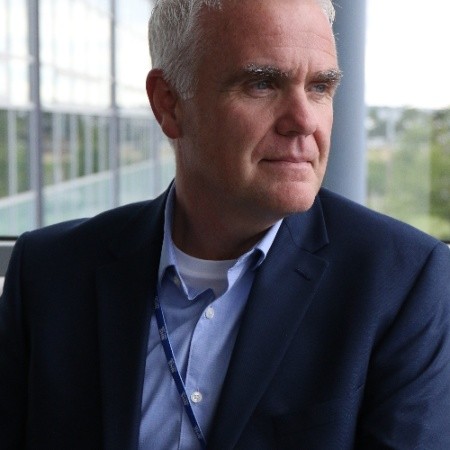
I am Tom Steele, and it is with great pride that I lead such an outstanding team across our healthcare and administrative facilities. I joined NHSGGC in October 2018 and prior to that I worked in NHS Ayrshire and Arran, NHS Forth Valley and NHS National Services Scotland. My early career started in February 1986 and I had no idea at that time that I would effectively spend the rest of my career in NHS healthcare.
My first role, “Works Services Technician”, equivalent to Band 2 nowadays was working in the hospital estates team involved with maintenance activity and small improvement projects. This experience stood me in good stead for on the job learning and I was also fortunate to have the support of the organisation to attend further education colleges for a few years. I was always keen to learn from anyone who would listen, so my advice to anyone would be to ask inquiring questions, and keep doing so – every day is a learning day. My job roles changed throughout the years and I was again fortunate to attend university and gain further educational qualifications, albeit I was probably 30+ years old by this time, so it’s never too late to go to university.
Our Directorate plays a vital role in supporting and enabling clinical services across NHSGGC and we are tasked with the crucial responsibility of ensuring that all facilities are functioning optimally. Our Directorate operates at strategic and operational levels, which not only manages the upkeep of our existing facilities, but also plans for future developments, adhering to legal and environmental standards. Our services are delivered 24/7,365 days a year to all departments to ensure patient and workplace safety, efficiency, and sustainability which are integral to organisational success.
Our contribution to patient safety and their satisfaction can only be delivered through our staff, all of whom play an equal role, and our continued desire to improve is testament to a progressive and customer focussed team.
.
Current Briefs and Updates
Estates and Facilities Directorate Team Brief
Get the latest updates and insights from this month’s team for Estates & Facilities brief.
Core Brief is our regular employee update and provides important updates across a variety of topics, ranging from operational and site specific information, through to messages for our staff from our Chief Executive.
Team Talk
As part of our ongoing commitment to listening to and engaging with our staff, we have launched a new communications platform – Team Talk.
Team Talk aims to distil the four most important pieces of information we’d like all staff to be aware of and engaged with each month.
Vacancies
Looking for your first job or planning your next career move? Discover exciting opportunities across various departments.
Project Search is recruiting again for the start of our thirteenth year in August 2025. Project Search is a full time one-year intensive work experience programme for young people between 18 – 29 years who have a learning disability and / or autistic spectrum condition and who want paid employment. The programme is based within Glasgow Royal Infirmary and while most placements will be in the hospital some may be in the wider community and with other employers.
There is an Information Session in Glasgow City Chambers Satinwood Suite on Wednesday 26th March at 3pm. However, there are lots of opportunities out with this event to talk to staff and hear more about the programme. This short video was made to celebrate the ten-year anniversary.
Staff all across the Estates and Facilities Directorate are working hard and doing great things every day. Please submit your teams’ Good News or Success Stories to us and we will share them here.
There are many different routes which enable people to start a career within the NHS. In NHS Greater Glasgow and Clyde we aim to offer a variety of opportunities.
Some will help individuals make career choices by providing an insight into the various roles within our organisation and others will support people to develop knowledge and skills that may assist them into future employment.
Medicine 2026 Programme
Window for booking for January to March 2026 Programmes are now closed
The programme of activity for Get Ready for Medicine will take place as follows:
January to March (S2 to S4) – Online evening lecture events
January to March (S5, S6,gap year, access students and postgraduate applicants planning October applications) – half day careers insight workshops.
February to June (S2 to S4) – NHSGGC will support delivery of Medic Insight Glasgow Programme (please make sure you are following Medic Insight Glasgow social media platforms as we don’t administer this programme)
NHS Greater Glasgow and Clyde will be running Get Ready for Medicine events for senior phase school pupils, living or studying in our catchment area and planning to apply to medical school through UCAS in October 2026. These events have been designed in collaboration with the University of Glasgow and have replaced traditional “shadowing” for work experience.
Get Ready for Medicine Events
In-person workshop events at the NHS Scotland Skills and Simulation Centre in Glasgow. These will give experience of medical school style tutorials, ethics discussions and some practical sessions such as blood-taking on manikins and basic life support.
An online lecture evening “Is medicine for me?”
Face-to-Face Work Experience Workshops: Get Ready for Medicine
This event open to senior phase pupils who are applying to medical school next October who hasn’t previously attended a GRfM workshop event.
Get ready for medicine S5, S6 and Adults apply to medical school Oct 2026 – Bookings Closed
S5 and S6 week programme: applications now closed.
January – S5, S6 and Adults workshops Get ready for medicine on the 30th January from 9.00am to 12.00pm and 1.00pm – 4.00pm
February – S5, S6 and Adults workshops Get ready for medicine on the 13th February from 9.00am to 12.00pm and 1.00pm – 4.00pm
We would also advise to make sure you have a look at the information below for the Reach Programme and Medic Insight Glasgow Programme. Also make sure are following Medic Insight Glasgow social media platforms (i.e. Facebook) for the Medic Insight Glasgow Programme and some Guidance for aspiring doctors from current medical students.
This event is open to anyone who is applying to medical school next October who hasn’t previously attended a GRfM workshop event.
We would also advise you to look at the information below for the Reach Programme and Medic Insight Glasgow Programme. Also make sure you are following Medic Insight Glasgow social media platforms ( ie Facebook) for the Medic Insight Glasgow Programme and some Guidance for aspiring doctors from current medical students. See more details below:
Read what the Medical Schools Council advises on the type of work experience needed to support your application to study Medicine. You should also visit the entry requirement pages of the university you wish to apply to for detailed information about the application process.
Please note that NHSGGC does not host “Shadowing” within a number of professions including Medicine. All requests for careers insight, to source placements or support self found placements for Medicine will be re directed to the Get Ready for Medicine Programme.
Nursing 2026 Programme – Dates to be confirmed – Registration list opened for Autumn 2026
The NHSGGC Get Ready for Nursing Programme is a 1 day face to face programme delivered by NHS and Educational Professionals to support your UCAS application to study Nursing or Midwifery.
This is only open to senior phase pupils (S5/S6) on track and with an intention to pursue a career in Nursing. Priority for places to those submitting an application via UCAS for enrolment in the next academic year.
Get Ready for Nursing – Registration list opened for Autumn 2026
The Get Ready for Nursing Programme has been postponed until later in the year.
Midwifery 2026 Programme – 19th May Webinar Registration list now opened
The NHSGGC Get Ready for Midwifery Programme is a virtual Webinar running in May 2026.
Later in the year 1 day face to face programme delivered by NHS to support your UCAS application to study Midwifery. This is only open to senior phase pupils (S5/S6) on track and with an intention to pursue a career in Midwifery. Priority for places to those submitting an application via UCAS for enrolment in the next academic year.
Get Ready for Midwifery- 19th May Webinar Registration list now opened
Join NHS Greater Glasgow and Clyde’s Midwifery Careers Insight Programme on 02 September 2026 (Venue TBC).
We particularly encourage applications from individuals from Black, Asian and Minority Ethnic (BME) backgrounds, helping to build a more diverse and inclusive NHS workforce.
Physiotherapy 2026 Programme – Dates for 2026 now opened
Considering a career in Physiotherapy
The NHSGGC Get Ready for Physiotherapy programme offers a valuable opportunity to gain firsthand experience. You will spend a day shadowing professionals in a busy hospital environment and observe two different clinical areas—ideal for those interested in seeing the range of places physiotherapists work.
What’s in it for you?
Learn about the varied workplaces where physiotherapists are employed.
Understand patient needs and become familiar with different therapy approaches.
Observe the daily responsibilities of physiotherapists.
This opportunity is available if you are in S5/6 or an adult who:
Is on track to achieve the qualifications required for university
Resides in Glasgow, West/East Dunbartonshire, Renfrewshire, East Renfrewshire, or Inverclyde
Has not previously completed a Physio work experience placement
Please note: Places fill quickly and are allocated on a first come, first served basis.
2026 Dates:
Wednesday 3rd June – Fully Booked
Wednesday 2nd September – Dates to be released to invite list mid June
Wednesday 2nd December – Dates to be released in invite list mid September
Locations available:
Glasgow Royal Infirmary
Gartnavel General Hospital
Queen Elizabeth University Hospital
Royal Alexandra Hospital
Inverclyde Royal Hospital
If you are interested, make sure not to miss this opportunity! See flyer for booking info
Podiatry 2026 Programme – Dates for 2026 now closed
NHS Greater Glasgow and Clyde Get Ready for Podiatry Programme
Ready to consider the future? Could Podiatry be the career for you?
Stay curious and join us on the NHS Greater Glasgow and Clyde Get Ready for Podiatry programme to find out more.
The NHS Greater Glasgow and Clyde Get Ready for Podiatry programme is a timetabled opportunity delivered by the NHS Greater Glasgow and Clyde Podiatry Service in collaboration with Higher Education Institutions and offers a hybrid experience to explore Podiatry as a profession.
This programme will offer a unique work experience opportunity for all who are considering Podiatry as a career option whether this be as a qualified podiatrist returning to practice, a school leaver or mature student
The programme will be delivered in 2 parts with the online element and the in-person element (successful candidates will be allocated a half day slot on one of the dates for the in-person session)
Within this opportunity we will offer a virtual session to explore the following:
The podiatry profession
Podiatry in NHS Greater Glasgow and Clyde
Guidance on routes of access to Podiatry courses
We will also offer in person work experience in NHS Greater Glasgow and Clyde including the following:
Dietetics 2026 Programme – New dates opened for applications
NHS Greater Glasgow and Clyde Get Ready for Dietetics Programme
Your Future Starts Here! NHS Greater Glasgow and Clyde, in collaboration with Scottish Higher Education Institutions, invites you to Get Ready for Dietetics – a virtual experience designed to ignite your passion and prepare you for a career in dietetics. Whether you’re a school pupil, school leaver, gap year student, or postgraduate planning to apply for a dietetic degree in Scotland via UCAS, this is your chance to explore the profession in a meaningful and accessible way.
What to expect:
A live online session (1 and a half to two and a half hours) via MS Teams A comprehensive overview of the dietetic profession and our services.
A glimpse into a ‘typical day’ in the life of a Dietitian Signposting to valuable resources and guidance
A chance to ask questions and hear from newly qualified and experienced Dietitians
A certificate of attendance to support your UCAS application Sessions are held twice per year, aligned with UCAS application and university clearing timelines.
Get ready for Dietetics 2026 – 10th June 2026/5th Nov 2026
There are 2 virtual dates running we will do our best to accommodate your first choice but please be advised this isn’t always possible.. Please see deals below
Orthotics 2026 Programme – New dates opened for applications
NHS Greater Glasgow and Clyde Get Ready for Orthotics Programme
Your Future Starts here … Are you curious about a career that transforms lives? NHS Greater Glasgow and Clyde invites you to Get Ready for Orthotics – an experience designed to inspire and inform your journey into this rewarding profession
These events have replaced traditional “shadowing” work experience
Whether you’re a school pupil, school leaver, gap year student, or postgraduate planning to apply for a degree in Prosthetics and Orthotics, this is your chance to explore the profession in a meaningful and accessible way.
Get ready for Orthotics – S5/S6/Adults apply for a degree in Prosthetics and Orthotics Oct 2026
Speech and Language 2026 Programme – 2026 Programme now closed
NHS Greater Glasgow and Clyde Get Ready for Speech and Language Programme
Your Future Starts here. Are you curious about a career that transforms lives through communication? NHS Greater Glasgow and Clyde, in partnership with Scottish Higher Education Institutions, invites you to Get Ready for Speech and Language Therapy – an interactive virtual experience designed to inspire and inform your journey into this rewarding profession.
Whether you’re a school pupil, school leaver, gap year student, mature student or postgraduate planning to apply for a Speech and Language Therapy degree in Scotland via UCAS, this is your chance to explore the profession in a meaningful and accessible way.
Get Ready for Speech and Language Programme – Programme March 2026 is now closed
Occupational Therapy 2026 Programme – New Virtual dates opened for applications
NHS Greater Glasgow and Clyde Get Ready for Occupational Therapy Programme
Your Future Starts here…Are you considering a career in Occupational Therapy?
The NHSGGC Get Ready for Occupational Therapy programme offers a valuable opportunity to gain insight into the role of an Occupational Therapist in NHSGGC, with both virtual and in-person opportunities available (virtual session attendance mandatory prior to enrolling for in-person work experience).
Whether you’re a school pupil, school leaver, gap year student, mature student or postgraduate planning to apply for an Occupational Therapy degree in Scotland via UCAS, this is your chance to explore the profession in a meaningful and accessible way.
Step into – Occupational Therapy – Virtual Session Programme, 16th June 2026, 2.30pm-3.30pm
Session Date: Virtual Session Programme, Tuesday 16th June 2026, 2.30pm-3.30pm.
Medical Physics / Clinical Engineering 2026 Programme – Programme now closed
Get Ready for Clinical Physics and Bioengineering will be holding an open day on Saturday 24 January 2026
NHS Greater Glasgow and Clyde’s Department of Clinical Physics and Bioengineering will be holding an open day on Saturday 24 January 2026 10:00am – 1:30pm on the Gartnavel Campus (1053 Great Western Road, Glasgow, G12 0YN).
This open day will beaimed at anyone interested in learning more about the role that medical physics and clinical engineering plays in healthcare, but in particular those thinking about a career in those areas. It will give you insight into the day-to-day workings of a medical physics / clinical engineering department, as well as giving you an opportunity to tour some of our facilities which aren’t usually open to the public.
Invites to Register have now been sent to those on the interest list.
Get Ready for Medical Physics and Clinical Engineering – Virtual open day – Monday 9th February
This online information session will be held on Monday 9 February (09:00am – 1:00pm) is aimed at graduates who are considering applying to the 2024 intake of the Scottish Medical Physics and Clinical Engineering Training Scheme (SMPCETS).The Scottish training scheme is run by a consortium of 5 centres (NHS Greater Glasgow and Clyde, NHS Lothian, NHS Tayside, NHS Grampian and NHS Highlands and Islands). It’s a 3.5 year programme of academic work (an MSc in Medical Physics or Bioengineering plus 2.5 years of work-based training) and provides a pathway to registration as a Clinical Scientist with HCPC via the Academy of Healthcare Sciences. For more information on the Scottish scheme see Scottish Medical Physics and Clinical Engineering Training Scheme (SMPCETS)
An e-mail will be sent to those who register with a link to the job advert as soon as it’s published (likely end of January).
The open day is hosted by all 5 training centres and is intended to give you an opportunity to gain insight into the day-to-day work of a physicist / engineer in the NHS in Scotland, to speak to current trainees and staff, and to virtually tour some of our facilities. The draft agenda is as follows:
09:00am – 11:00am Introduction to SMPCETS and introductions to the main physics and engineering modalities 11:00am – 11:10am Break 11:10am – 11:40am Talks on Trainee Experience 11:40am – 12:00pm Break 12:00pm – 12:30pm Breakout sessions – an opportunity to network with current trainees
My World of Work – My World of Work | – information and job profiles on AHP careers as well as access to course searches
NHS Education for Scotland/NHS Careers Scotland have developed a series of careers resources to highlight the range of careers available as an Allied Health Professional which were launched on the 14th of October.
The below downloadable poster also includes a career routes infographic.
You will find information about what Occupational Therapists do and how to become one, as well as stories and videos from Occupational Therapists about why they love their career. The Choose OT website is the resource that we share with people interested in becoming an Occupational Therapist, including school pupils.
Resources for careers talks
RCOT: We also have resources on our website for people wanting to promote occupational therapy careers. These include guides and presentations for giving careers talks in schools and videos of occupational therapists sharing their career stories.
Is your team interested is setting up a Careers insight programme if so please complete Careers insight Creation form 2026 – Fill in form and we will be in touch to support your team as best we can.
Other Pathways
Senior Phase Pupils/Adults – Self Found if no Get Ready Programme
If there is no Get Ready Programme covering your field of interest then applicants are required to source placements by themselves i.e. we do not match applicants to host supervisors. A request for this type of placement should be made directly to the department of interest who will negotiate the content and length of the placement. If a placement can be accommodated the host department will contact the Learning and Education team to confirm the arrangements.
In order to access a placement within NHSGGC (even if you have identified a host department by yourself) pupils must complete the Self-Found Placement Request.
The NHSGGC supervisor will then confirm the placement by complete the Supervisor Confirmation Form. By completing these form you are agreeing that the placement will commence.
Please use the links for more information on these areas.
Administration Career pathway Toolkit
The Career and Education Pathway Toolkit is a visual guide that help identify the relevant requirements for each admin post within PAT (Professional Administration Transformation) admin family. Covering from modern apprentice through each of the bandings up to senior management levels. It can help with career progression or upskilling in your current role.
In the Staff Support page you can find links to a variety of resources that are designed to help staff understand their role and how NHSGGC operates.
See more at the links below.
Staff Support
NHS Workforce Policies
NHS Workforce Policies developed nationally in partnership with NHSScotland employers, trade unions and the Scottish Government, these policies and associated supporting documents set the standard for employment practice all our Boards follow.
Self-Referral and Counselling
All NHS Greater Glasgow and Clyde employees can access Self Referrals and Counselling through the Occupational Health Service to receive a wide range of support services.
Civility Saves Lives
Civility Saves Lives are healthcare professionals aiming to raise awareness of the power of civility in patient care and the impacts of incivility on teamwork and patient outcomes.
Healthy Working Lives
Healthy Working Lives is a support and referral service for NHS staff absent – or at risk of absence – from work due to health conditions.
Peer Support
We know that when people feel supported and heard, it has a positive impact on their wellbeing and resilience through Peer Support Network
Popular Links
Annual Leave Calculator
Annual leave calculator is a helpful tool to help employees calculate their annual leave entitlement in hours.
Flexible Work Pattern
Flexible Work Pattern Policy is a framework to support employees when they request, or managers propose options for flexible work patterns.
Attendance Policy
Attendance Policy aims to encourage and support employee attendance, where health impacts their ability to be at work.
Additional Support and Resources
Mental Health
Mental health will help to identify, treat and manage mental health problems and disorders.
Breathing Space
Sometimes our thoughts and feelings can overwhelm us. It helps to get some Breathing Space.
Bereavement Support
Grief can be overwhelming, but you don’t have to deal with it alone as Bereavement Support is here to help.
If your enquiry is urgent or you would prefer to talk to one of the HR Assistants please contact us by telephone0141 278 2700 option 2. The team are available at the following times:
NHSGGC promotes good mental health and the wellbeing of our staff. We treat our people fairly regardless of their mental health status and we don’t discriminate. We also provide a safe and healthy workplace.
Mental health problems like stress, depression or anxiety cause a significant proportion of sickness absence across Scotland. We know that getting support at an early stage can prevent absence from work and help recovery.
To achieve this, our staff will be managed in a way that is not detrimental to their mental health and positively promotes mental health and wellbeing, following our policies in this area.
Top Tips
Mental health problems are a common cause of long term sickness absence and have major resource implications for NHSGGC. Promoting positive mental health and wellbeing helps improve physical health, social inclusion and productivity
NHSGGC has a duty of care under our Staff Governance Standard to protect the mental health and wellbeing of our staff whilst they are at work. We are also committed to tackling disability discrimination, including discrimination relating to people who experience mental health problems.
Beyond our legal obligations, we promote good mental health and wellbeing by providing healthy working environments to help develop and nurture staff.
Policy
NHSGGC aim to promote and protect the mental health and wellbeing of staff. A range of policies and practices exist to help us do this and this policy guidance brings these together for easy reference: Board Mental Health and Wellbeing Policy.
The NHS Scotland Workforce Attendance Policy came into effect on the 1st March 2020. This policy aims to encourage and support employee attendance, where health impacts their ability to be at work.
The aim of Attendance Management is to help the Board make the most of the employee attendance by reducing both short and long-term absence through promoting positive attitudes to work and effectively working in partnerships with all parties to reduce employee absence to the minimum levels as possible. This policy ensures that NHSGGC adopt a fair, consistent and supportive approach to staff with health problems, resolving long term or on-going absences through the most appropriate means available and ensuring they provide a healthy and safe workplace.
COVID Special Leave will end on Sunday 31st March 2024. Therefore, from 1st April 2024 any employee absent due to COVID symptoms will be recorded as sick leave. Please see DL(2024)03 – Removal of Temporary COVID Special Leave for further information.
The introduction of the Workplace Adjustment Passport aims to support employees with a disability, health condition or diversity in the workplace to have a great experience at work. This can be used to support employees within their current workplace or when moving between departments and / or roles. This is in accordance with the Equality Act 2010.
Further guidance on attendance management specific to staff working in Glasgow City HSCP can be found here.
NHSGGC Menopause Policy
NHSGGC is committed to ensuring the health, safety and wellbeing of our employees and ensuring everyone is treated with dignity and respect.
The menopause is a natural process and for many can be positively managed through lifestyle adjustments. However, NHS Greater Glasgow and Clyde recognises that for some the menopause is not always an easy transition. Some employees may need additional considerations to support and improve their experience at work.
NHS Greater Glasgow and Clyde is committed to supporting employees who are affected in any way by the menopause and to support and inform managers so that employees reporting issues are treated fairly and given appropriate support.
Following long term absence the arrangements are that an employee who returns to work on a phased return as recommended by Occupational Health will be entitled to be paid for a period of up to 4 weeks at their normal contractual pay.
If the phased return needs to extend beyond 4 weeks, the employee will be expected to contribute any accrued annual leave. However, if an employee does not wish to use their annual leave they can opt to be paid according to the actual hours worked during the phased return period.
Phased returns should not normally last for periods of longer than 8 weeks.
NHSGGC have a zero tolerance approach to smoking on all NHS grounds and premises. NHS Greater Glasgow and Clyde is committed to providing a safe and healthy environment for all staff, patients and visitors.
Our Smokefree Policy aims to work towards a tobacco-free environment. This policy applies to all staff, patients and visitors.
This course is designed to help our senior managers to promote and achieve the highest ED&I standards and getting the best performance from their teams by valuing the diversity across the workforce.
It aims to ensure a consistent understanding about how best to lead teams in a way that respects diversity, promotes an inclusive workplace and treats all staff equitably by Integrating EDI into a broader people centred approach to people management.
Course Provider: Learning and Education in partnership with City of Glasgow College
Duration; 3.5 hours
Method of Delivery; Online (MS Teams)
Who should attend
Any senior manager (Band 7 and above) in NHSGGC who has responsibility for managing NHSGGC staff in their teams. This includes managers employed in integrated Health and Social Care Partnerships who are not directly employed by NHSGGC.
Pre-requisites
Familiarity with the following resources will be useful:
Click here to see the available dates and book a place. If dates do not appear on link then they are fully booked. In this case please add your name to the waiting list and you will be offered first when new dates become available.
If you need any information on specific course content or booking process, please do not hesitate to contact Learning and Education Support Service on 0141 278 2700 (Option 3).
Was this helpful?
Yes
No
Thanks for your feedback!
Course Overview
This course is designed to help our people managers to promote and achieve the highest ED&I standards and getting the best performance from their teams by valuing diversity across the workforce.
It aims to ensure a consistent understanding across all current managers about:
• How best to manage teams in a way that respects diversity, promotes an inclusive workplace and treats staff equitably
• How to Integrate ED&I into a broader people centred approach to people management, and also
• Some of the key supports, policies and processes that managers can draw on and apply to enable that approach.
Course Provider: Learning and Education in partnership with City of Glasgow College
Duration; 3 hours
Method of Delivery; Online (MS Teams)
Who should attend
Any middle manager (up to Band 6) in NHSGGC who has responsibility for managing NHSGGC staff in their teams. This includes managers employed in integrated Health and Social Care Partnerships who are not directly employed by NHSGGC.
Pre-requisites
Familiarity with the following resources will be useful:
Click here to see the available dates and book a place. If dates do not appear on link then they are fully booked. In this case please add your name to the waiting list and you will be offered first when new dates become available.
If you need any information on specific course content or booking process, please do not hesitate to contact Learning and Education Support Service on 0141 278 2700 (Option 3).
Was this helpful?
Yes
No
Thanks for your feedback!
Alcohol and Drug Partnerships (ADPs) bring together local partners including health boards, local authorities, police and voluntary agencies. Based on an assessment of local needs the ADPs are responsible for commissioning and developing local strategies to reduce the use of and harm from alcohol and drugs alongside promoting recovery.
Across Greater Glasgow and Clyde there are 6 ADPs, East Dunbartonshire, East Renfrewshire, Glasgow City, Inverclyde, Renfrewshire and West Dunbartonshire.
Know the Score – A website that provides information and support on drugs including a free helpline and webchat.
NHS Inform – Support for people affected by drugs.
The Thistle – Glasgow’s Safer Drug Consumption Facility is a supervised healthcare setting where you can consume your own drugs, obtained elsewhere, under the supervision of trained health and social care professionals, in clean, hygienic and safe environments reducing the risk of overdose.
With You – Provide free and confidential support to adults and young people facing challenges with alcohol, drugs and mental health.
Young People
Glasgow City Youth Health Service – NHSGGC – The Glasgow City YHS offers support for young people across nine locations in Glasgow. The Multiple Risk programme, which is a 12-week programme will address individual risks, including drugs and alcohol.
Routes – SFAD – Routes is a youth work programme delivered in East and West Dunbartonshire by Scottish Families Affected by Alcohol and Drugs (SFAD). The service supports young people aged 12 – 26 years affected by alcohol and drugs within their family.
With You – Provides brief interventions, advice and emotional support via a Webchat service. Webchat is an accessible, free and anonymous service for anyone over the age of 13 who is in need of drug, alcohol or mental health support.
Families
Family Addiction Support Service (FASS) – FASS offers free confidential support, advice and information to family members across Glasgow who have been affected by a loved one’s drug or alcohol use.
LGBT Health and Wellbeing – Scotland’s health and wellbeing charity for LGBTQ+ adults. Working to improve the physical, social, and mental health and wellbeing of LGBTQ+ adults (16+) in Scotland.
LGBT Youth Scotland – Youth Scotland support young people aged 13 – 25 years in all aspects of their lives through the provision of amazing youth work, and we support them to use their voice to create change in equality and human rights.
Kinder Stronger Better – A website developed for and by members of the Glasgow LGBTQ+ community and professionals to provide information and advice to LGBTQ+ people about alcohol and drugs, as well as where to get help and support in Glasgow (and beyond).
Justice
Families Outside – Help, Information and support for families affected by imprisonment.
Sacro – Sacro is a Scottish community justice organisation which works to deliver life-changing services that empower people, give hope and protection, and help to build safe communities.
The Croft – Providing practical and emotional support, information and advice to the families impacted by a loved one’s imprisonment at HMP Barlinnie.
The Clinical Training Team were proud to be awarded SCoR Radiography Team of the Year for Scotland 2024!
The Scottish Academy of Breast Imaging (SABI) in Glasgow has offered Mammography training for over 20 years across Scotland, the rest of the United Kingdom (UK) and Ireland. SABI courses focus on the needs of Breast Service as a whole and are offered to a number of healthcare practitioners including Radiographers, Assistant Practitioners, Sonographers, Nurses, Breast Radiologists, Breast Surgeons and Breast Clinicians.
SABI offers a range of courses including PgCert Mammography for Radiographers and HECert Mammography for Assistant Practitioners. Advanced Practice options are designed to enable professional and clinical skills development for individuals who wish to extend their scope of practice within breast imaging. Further modules are available through Queen Margaret University (QMU) in Edinburgh to support the full MSc Awards and the 4 pillars of practice.
Courses are delivered either online or in person (see individual module information) and use QMU systems such as the Library and Canvas to support student learning.
All courses are approved by the College of Radiographers and run in collaboration with QMU. The PgCert Breast Ultrasound is also CASE Accredited.
If you would like to be added to the mailing list for the SABI Quarterly Newsletter then please contact Simon Holmes at SABI (simon.holmes@nhs.scot).
The Scottish Academy of Breast Imaging Team
The Clinical Training Team were very pleased to win the 2024 SCoR Radiography Team of the Year for Scotland! Simon, Zoe and Christine travelled down to the ceremony in London on 7th November to collect the awards. The certificates will be hung on the walls of the Edinburgh and Glasgow Breast Screening Centres with pride!
The Scottish Academy of Breast Imaging is based at the West of Scotland Breast Screening Centre in Glasgow. Simon Holmes is National Mammography Training Lead and is responsible for running the Academy alongside Maureen McAuley who is Programme Administrator. You will find their contact details at the bottom of this site.
SABI also has a Clinical Training Team who are Band 7 Mammographers supporting the education and training of Mammographers and Assistant Practitioners on the PgCert and HECert Mammography programmes as well as delivering Clinical Updates across Scotland, the rest of the UK and Ireland to help maintain standards of practice within breast imaging.
There are currently 8 SABI Clinical Trainers:
Christine Loder, Claire Crawford, Isabelle Tait, Kayleigh O’Loughlin and Samantha McWaters are based at the West of Scotland Breast Screening Centre in Glasgow.
Alyson Munro, Laura Dick and Zoe Allan based at the South East Scotland Breast Screening Centre in Edinburgh.
The Postgraduate Certificate (PgCert) in Mammography: 60 Credits SCQF Level 11
PgCert Mammography intakes: March, August and November
The PgCert Mammography delivered by the Scottish Academy of Breast Imaging is a 9 months blended course designed to allow HCPC or Coru Registered Radiographers to train as Mammographers. All the academic content is delivered by SABI via three online blocks and includes pre-recorded resources and live workshops. You will be offered a Clinical Training week in either Glasgow or Edinburgh where you will be assigned a Clinical Trainer for a full week of face-to-face clinical teaching. Your Clinical Trainer will also travel to your own department to carry out the assessments associated with the clinical modules.
You will also require a Work-place Mentor who will support your learning throughout the course.
Each 20 credit module reflects 200 hours of learning and you will need support to carry out a minimum of 20 Mammograms per week throughout the course.
The PgCert Mammography runs three times a years and you can apply to register in March, August or November.
The three modules you will need to complete to be eligible for the PgCert Mammography award are as follows:
Mammography and Person-centred Care (RM097) 20 Credits: This module aims to provide the learner with the theoretical and practical base to develop a high level of expertise in mammography and person-centred care.
Mammography Practice-based Learning (RM098) 20 Credits: This module aims to encourage the learner to develop as a competent reflective practitioner within breast imaging integrating theory and practice associated with MLO and CC projections.
Advanced Mammography Skills (RM099) 20 Credits: This module aims to encourage the learner to develop as a competent reflective practitioner within breast imaging integrating theory and practice associated with advanced mammographic projections.
Advanced Practice Options: Various Credit Ratings at SCQF Level 11
Advanced Practice Modules: various intakes throughout the year
All advanced practice modules delivered at the Scottish Academy of Breast Imaging require a Work-place Mentor who will support your learning throughout the module as well as carry out the clinical assessments.
PgCert Breast Ultrasound 60 Credits: This CASE Accredited 60 credit award consist of three 20 Credit modules. You can opt to complete the whole PgCert Breast Ultrasound to complete modules as CPD if you have the module prerequisites. Contact SABI for more information.
Physics and Instrumentation of Ultrasound (RM087) 20 Credits (September intake): This module starts in September and is taught face-to-face over five days at the Royal Edinburgh Infirmary enabling healthcare practitioners to learn about and critically evaluate the scientific and technological principles of ultrasound and the appropriateness of using ultrasound within medical imaging.
Breast Ultrasound (RM088) 20 Credits (January intake): This fully online module starts in January and will enable healthcare practitioners to understand the theoretical principles of breast ultrasound and be able to competently and safely practice ultrasound imaging of the breast and produce diagnostic clinical reports.
Ultrasound Guided Breast Interventional Procedures (RM089) 20 Credits (June intake): This module starts in June and is taught face-to-face over four days at the SABI providing the healthcare practitioner with the appropriate knowledge and skills to develop a high level of expertise in ultrasound guided interventional procedures of the breast and to perform effective and safe ultrasound guided biopsy procedures.
X-ray Guided Interventional Breast Procedures (RM095) 20 Credits (October intake): This module starts in June and is taught face-to-face over four days at the SABI providing healthcare practitioners with the appropriate knowledge and skills to develop a high level of expertise in stereo x-ray guided interventional procedures of the breast.
Clinical Breast Examination and Communication (RM096) 20 Credits (November intake): This module starts in November and is taught face-to-face over four days at the SABI providing the healthcare practitioners with the appropriate knowledge and skills to develop a high level of expertise in Clinical Breast Examination and demonstrate, with sound theoretical knowledge, effective communication and counselling skills.
Mammographic Image Interpretation (RM100) 40 Credits (March intake): This module starts in March and is taught face-to-face over four days at the SABI providing the healthcare practitioners with the appropriate knowledge and skills to develop a high level of expertise in mammographic image interpretation, thus enabling the autonomous practitioner to participate in the diagnosis, reporting and assessment of breast disease.
The Higher Education Certificate in Mammography a 12 month blended course designed to allow non-registered staff to train as Assistant Practitioner Mammographers. All the academic content is delivered by SABI via five online blocks and includes pre-recorded resources and live workshops. You will be offered a Clinical Training week in either Glasgow or Edinburgh where you will be assigned a Clinical Trainer for a full week of face-to-face clinical teaching. Your Clinical Trainer will also travel to your own department to carry out the assessments associated with the clinical module.
You will also require a Work-place Mentor who will support your learning throughout the course.
Each 20 credit module reflects 200 hours of learning and you will need support to carry out a minimum of 20 Mammograms per week throughout the course.
The HECert Mammography starts in January each year.
The five modules you will need to complete to be eligible for the HECert Mammography award are as follows:
Production of the X-ray Image (R1052) 20 Credits: This module will develop knowledge of the physical principles involved in x-ray production and the fundamental principles involved in image production as well as developing an awareness of the hazards of radiation, the principles of radiation safety and radiation protection legislation.
Breast Anatomy and Disease (R1053) 20 Credits: This module is designed to equip the learner with knowledge of anatomy and physiology of the breast as well as common breast pathologies and associated treatment options.
Communication (R1054) 20 Credits: This module will allow the learner to develop effective strategies of communication with clients, patients, relatives, carers and all members of the health care team they encounter.
Person-centredness in the Breast Care Service (R1055) 20 Credits: This module is designed to enable learners to gain an awareness of person-centred approaches to healthcare delivery focussing on practices and protocols necessary to maintain optimal standards of care.
Mammography Practice for Assistant Practitioners (R1056) 40 Credits: This work-based module will enable the learner to develop organisational skills prior to the imaging procedure in order to acquire routine mammographic projections to comply with National Standards whilst demonstrating appropriate client/patient care and reflective practice.
Extended Practice for Assistant Practitioners in Mammography: Single 20 Credit Module SCQF Level 8
Extended Practice for Assistant Practitioners in Mammography: May intake
Extended Practice for Assistant Practitioners in Mammography (R1051) 20 Credits: This standalone module is designed for Assistant Practitioners in Mammography (Mammography Associates) who wish to develop their clinical skills and extend their scope of practice. The aim is to provide the learner with a range of skills to develop their clinical knowledge and technique of additional mammography views within assessment clinic including mag and coned views, the augmented breast, implantable devices and post clip imaging.
All the academic content is delivered by SABI during a single online block and includes pre-recorded resources and live workshops. You will be offered a Clinical Training week in either Glasgow or Edinburgh where you will be assigned a Clinical Trainer for half a week of face-to-face clinical teaching. Your Clinical Trainer will also travel to your own department to carry out the assessments associated with this clinical module.
The module starts in May and lasts for 7 months.
PgDip/MSc Mammography: Additional modules through QMU
A variety of study options are available to you if you wish to complete the PgDip Mammography (120 Credits) or the full MSc Mammography (180 Credits). You can select from the clinical modules offered directly by SABI or options focussing on the other pillars of practice delivered by QMU:
Education
Leadership
Research Methods
Dissertation
You have a maximum of 7 years to complete the full MSc. If you have previous appropriate academic credits from SABI/QMU and are unsure if you can include them within you MSc then please contact Simon Holmes at SABI (simon.holmes@nhs.scot).
If you have studied modules at other Universities you may be able to use these academic credits towards your MSc. If you are unsure whether you can include them within you MSc then please contact Simon Holmes at SABI (simon.holmes@nhs.scot).
For general information on your module options and how they might link to the academic credits you already have please contact Simon Holmes at SABI (simon.holmes@nhs.scot).
SABI Clinical Training
Overview
Face-to-Face clinical training is offered to all students on the PgCert Mammography (1 week), HECert Mammography (1 week) or extended Practice for Assistant Practitioners in Mammography module (half a week). This is delivered by a designated SABI Clinical Trainer in either Glasgow or Edinburgh. The dates for your clinical training week and your named Clinical Trainer will be assigned to you when you apply for the course. Your Clinical Trainer will work with you throughout the course and be your point of contact if you have any difficulties. They will also arrange the dates for your clinical assessments which will be done on mutually convenient dates and in discussion with your line manager and mentor.
Glasgow Centre
The Clinical Training week in Glasgow is at the West of Scotland Breast Screening Centre which is situated on Nelson Mandela Place in next to Queen Street Train Station in Glasgow City Centre. There are 5 Clinical Trainers who work at this centre; Claire, Isabelle, Christine, Kayleigh and Samantha.
Edinburgh Centre
The Clinical Training week in Edinburgh is at the South East Scotland Breast Screening Centre which is situated at Ardmillan House near Haymarket Train Station in Edinburgh City Centre. There are 3 Clinical Trainers who work at this centre; Alyson, Zoe and Laura.
Workplace Mentors
Overview
For all modules which have a clinical element, you will be expected to have a Workplace Mentor. This is someone who will be selected by your Line Manager to support your learning throughout the duration of the course. They may also be required to carry out clinical assessments depending on the modules you are registered on.
Roles and responsibilities of the Workplace Mentor
Your Workplace Mentor will have a number of roles and responsibilities to ensure you are supported throughout your studies but differ slightly depending on which course you are registered on. In general, these include being available for the duration of the course, ensure you have the necessary departmental clinical time and resources to successfully complete the course as well as provide formal and informal feedback to fulfil module requirements. These points will be agreed with your Workplace Mentor at the beginning of your studies
Workplace Mentor Training
The roles and responsibilities of a Workplace Mentor is dependant on the course, and therefore specific online training is offered for all individuals embarking on Workplace Mentorship. Firstly, the Workplace Mentor will be given access to some online resources to review. This is followed by an hour long online session delivered via MSTeams where the SABI Lead covers the expectations, documentation and assessment associated with the module(s). A CPD certificate will be given for all individuals who attend the online mentor training.
For information regarding the expectations of a Workplace Mentor please contact Maureen McAuley at SABI (Maureen.McAuley@nhs.scot)
SABI Clinical Updates
Overview
SABI offers Clinical Updates which are facilitated by the Clinical Training Team. These are bespoke and can be arranged for individuals or departments depending on need.
If you have a member of staff who has a consistency high Technical Recall rate for instance, SABI can put a package involving one-to-one training. These Clinical Updates tend to run at the Glasgow or Edinburgh Breast Screening Centres.
If you simply would like an informative Clinical Update for your department, then again SABI can put a package together but the Clinical Trainers will come to you for these.
How to organise a clinical update
For costs and how to organise a clinical update please contact Maureen McAuley at SABI (Maureen.McAuley@nhs.scot)
How to apply for courses
To apply for the clinical mammography courses and modules run directly by SABI then contact Maureen McAuley (Maureen.McAuley@nhs.scot) and an application form will be sent out to you.
Modules associated with the MSc Mammography such as Research Methods and Dissertation are run directly by QMU and should be applied for via this link: MSc Mammography Online Application
If you are unsure and want to discuss options then please contact Simon Holmes at SABI (simon.holmes@nhs.scot).
Entry Requirements
PgCert Mammography
To apply for the PgCert Mammography you will need a degree or diploma in Diagnostic Radiography or Therapeutic Radiography with HCPC/Coru registration and current employment in a clinical environment offering mammography experience.
HECert Mammography
To apply for the HECert Mammography you will need 2 passes at SQA Higher Level or equivalent and working in a clinical environment offering mammography experience.
PgCert Breast Ultrasound
To apply for the PgCert Breast Ultrasound, applicants must be a healthcare practitioner currently employed in a clinical environment offering breast ultrasound experience to study the workplace modules and have with the support of a line manager and workplace mentor.
Advanced Practice Clinical Modules
To apply for the Advanced Practice Clinical Modules, applicants must be a healthcare practitioner currently employed in a clinical environment offering relevant experience to study the workplace modules and have with the support of a line manager and workplace mentor. Please contact Maureen McAuley at SABI (Maureen.McAuley@nhs.scot) to discuss entry requirements.
MSc modules through QMU
To apply for MSc modules through QMU such as Research Methods or Dissertation please contact Simon Holmes at SABI (simon.holmes@nhs.scot) to discuss options. and entry requirements.
Recognition of Prior Learning
You may be granted exemption from studying a module, provided you can demonstrate successful achievement of all the learning outcomes. Please contact Simon Holmes at SABI (simon.holmes@nhs.scot) to discuss options.
IELTS
If English is not your first language then you will be required to provide evidence of English language competence at IELTS 7 (no less than 6.5 in any element) or equivalent.
Useful Resources
Additional information can be found below via the QMU Website although ensure you discuss options with Simon Holmes (simon.holmes@nhs.scot) before applying for any QMU specific options:
The Scottish Academy of Breast Imaging is based at the West of Scotland Breast Screening Centre in Glasgow:
Stock Exchange Court, 77 Nelson Mandela Place, Glasgow, G2 1QT
How to contact the Scottish Academy of Breast Imaging
If you are applying for the clinical courses run by SABI then contact Maureen McAuley who will send you an application form as well as general information about the course you wish to apply for: Maureen.McAuley@nhs.scot
If you are unsure and want to discuss options then please contact Simon Holmes simon.holmes@nhs.scot
Was this helpful?
Yes
No
Thanks for your feedback!
Facilitation of Learning animation
Introduction to the Facilitation of Learning Toolkit
This toolkit is a suite of resources designed to assist experienced educators and facilitators, with expert knowledge and skills in facilitating work-based learning, to deliver the NES Facilitation of Learning programme. Ideally, facilitators should have a qualification and experience in healthcare education, for example, those with a post-graduate certificate in education or professionals who work in continuing practice and professional development departments, or in a practice education role, or learning and development roles.
This toolkit provides information and practical guidance on preparing healthcare professionals and service users or carers, who may be involved in facilitating interprofessional learning, uni-professional learning, or service user/carer education in the workplace.
The toolkit is intended to be a flexible resource. Sections of the toolkit can be used to support existing learning programmes or activities or used in its entirety to plan specific programmes depending on local or individual needs. Specific considerations for online delivery of education are not covered in this toolkit. Information in relation to developing and delivering online learning can be found on the Guidance for education page in TURAS Learn.
The Facilitation of Learning Programme
Facilitation of Learning Programme aims to support health and social care workers with a role in facilitating learning in the workplace. It has been developed to support those involved in facilitating learning as part of their role in the workplace, who wish to develop or refresh their knowledge and skills in the delivery of education and training. Its purpose is to support the development of knowledge and skills in relation to the design and delivery of education and training and is relevant for both clinical and non-clinical roles.
Participants of the programme will be offered the opportunity to use a blended learning approach consisting of two parts. The first part is the completion of Units 1- 4 of the NES Facilitation of Learning programme (approximately eight hours) accessed via TURAS Learn. The second part is engagement in interactive workshops, either online or in-person (approximately eleven hours), arranged by your local facilitator. These workshops can be delivered in a variety of ways either four online workshops or two full day workshops. The programme aims to help them plan, deliver and evaluate their own learning programmes. The content is focused on the theory and principles which underpin effective adult teaching and learning. Facilitated development workshops can be delivered locally. All the resources required for facilitation of the programme and further information can be accessed via TURAS Learn.
We use cookies to analyse traffic to our site and to enable certain functions such as forms and YouTube videos. These do not collect personal information. By clicking "Accept All", you consent to our use of cookies, or you can customise the options.
This website uses cookies
Websites store cookies to enhance functionality and personalise your experience. You can manage your preferences, but blocking some cookies may impact site performance and services.
Essential cookies enable basic functions and are necessary for the proper function of the website.
Name
Description
Duration
Cookie Preferences
This cookie is used to store the user's cookie consent preferences.
30 days
CloudFlare provides web performance and security solutions, enhancing site speed and protecting against threats.
Sequence rules uses cookies to track the order of requests a user has made and the time between requests and makes them available via Cloudflare Rules. This allows you to write rules that match valid or invalid sequences. The specific cookies used to validate sequences are called sequence cookies.
session
cf_ob_info
The cf_ob_info cookie provides information on: The HTTP Status Code returned by the origin web server. The Ray ID of the original failed request. The data center serving the traffic
session
cf_chl_rc_m
These cookies are for internal use which allows Cloudflare to identify production issues on clients.
session
__cfruid
Used by the content network, Cloudflare, to identify trusted web traffic.
session
__cf_bm
Cloudflare's bot products identify and mitigate automated traffic to protect your site from bad bots. Cloudflare places the __cf_bm cookie on End User devices that access Customer sites that are protected by Bot Management or Bot Fight Mode. The __cf_bm cookie is necessary for the proper functioning of these bot solutions.
session
__cflb
When enabling session affinity with Cloudflare Load Balancer, Cloudflare sets a __cflb cookie with a unique value on the first response to the requesting client. Cloudflare routes future requests to the same origin, optimizing network resource usage. In the event of a failover, Cloudflare sets a new __cflb cookie to direct future requests to the failover pool.
session
_cfuvid
The _cfuvid cookie is only set when a site uses this option in a Rate Limiting Rule, and is only used to allow the Cloudflare WAF to distinguish individual users who share the same IP address.
session
cf_clearance
Whether a CAPTCHA or Javascript challenge has been solved.
session
cf_use_ob
The cf_use_ob cookie informs Cloudflare to fetch the requested resource from the Always Online cache on the designated port. Applicable values are: 0, 80, and 443. The cf_ob_info and cf_use_ob cookies are persistent cookies that expire after 30 seconds.
session
__cfwaitingroom
The __cfwaitingroom cookie is only used to track visitors that access a waiting room enabled host and path combination for a zone. Visitors using a browser that does not accept cookies cannot visit the host and path combination while the waiting room is active.
session
cf_chl_rc_i
These cookies are for internal use which allows Cloudflare to identify production issues on clients.
session
cf_chl_rc_ni
These cookies are for internal use which allows Cloudflare to identify production issues on clients.